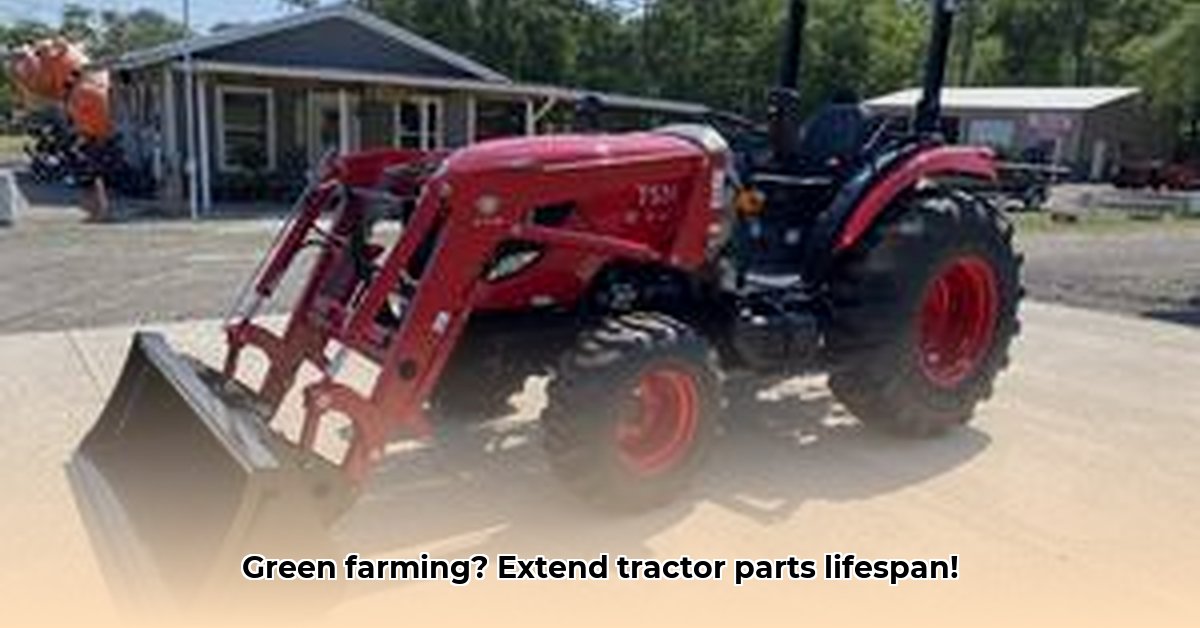
Black Creek Tractor Parts: A Case Study in Sustainable Agriculture
Black Creek Tractor Parts (BCTP) isn't your average parts supplier; it's a leader in sustainable agricultural practices. Their innovative approach to sourcing and refurbishing used tractor parts offers a compelling model for extending equipment lifespan and minimizing environmental impact. This case study explores BCTP's operations, analyzes its sustainability benefits, and examines the potential for widespread adoption of their model. The core question is: How can BCTP's success be replicated to create a more environmentally responsible agricultural sector? Learn more about the future of farming with autonomous tractors.
BCTP's Operations: Salvaging and Refurbishing a Sustainable Future
BCTP operates eight large salvage yards in eastern Wisconsin, transforming what might appear as scrapyards into bustling hubs of activity. These yards are overflowing with disassembled tractors, a treasure trove of reusable parts. The company handles a vast array of components, from massive engines and transmissions to the smallest nuts and bolts—all carefully inspected, cleaned, repaired, and often completely refurbished. The process is a testament to meticulous craftsmanship, transforming discarded metal into reliable, affordable, and environmentally conscious alternatives to new parts. (Think of it as giving your tractor a sustainable makeover!)
Sustainability Analysis: Quantifying the Environmental and Economic Benefits
BCTP's model yields significant environmental and economic advantages. By reusing parts, they drastically reduce the need for new part manufacturing, leading to substantially lower carbon emissions and reduced landfill waste. This translates into a significant reduction in the carbon footprint of agricultural operations – a crucial factor in mitigating climate change. Economically, farmers benefit from cost savings on replacement parts, extending the operational life of their valuable machinery. However, challenges remain. Sourcing rare or obsolete parts proves difficult, akin to finding a specific piece in a massive, disassembled Lego castle. Furthermore, accurately quantifying BCTP's overall environmental impact requires ongoing, detailed data collection – a challenge BCTP is actively addressing.
How significant is the reduction in carbon emissions? While precise figures require further research, the reduction is substantial given the energy-intensive nature of manufacturing new parts. This aligns directly with the growing need for sustainable agricultural practices.
Scalability and Replication: Expanding the Model Beyond Wisconsin
BCTP's current success is concentrated in eastern Wisconsin. To expand its impact, several strategies are crucial. Improving inventory management systems through advanced tracking and organization will allow for more efficient sourcing and minimize parts waste. Strategic collaborations with tractor manufacturers could create a closed-loop system, where manufacturers design for repairability, and BCTP facilitates part recycling at the end of a tractor's life. Government incentives could also encourage both farmers and businesses to adopt sustainable practices, fostering the establishment of a nationwide network of parts recyclers – a truly interconnected, environmentally responsible system.
What are the key obstacles to expanding BCTP's model to other regions? Logistical challenges, including transportation costs and the establishment of new salvage yards, are key. However, the potential payoff in terms of environmental and economic benefits makes this expansion a compelling goal.
Conclusion: A Collaborative Approach to Sustainable Agriculture
Black Creek Tractor Parts offers a powerful example of how sustainable practices can benefit both farmers and the environment. Their model highlights the importance of collaboration across various stakeholders: farmers adopting responsible maintenance practices; businesses developing innovative solutions; and policymakers creating supportive regulatory and incentive structures. By working together, a greener, more sustainable future for agriculture becomes a tangible reality – a vision worth pursuing. This case study highlights BCTP's success, emphasizing the considerable potential for their model to influence broader agricultural sustainability practices.
Three Pivotal Points:
- BCTP's model significantly reduces carbon emissions and landfill waste associated with agricultural machinery.
- The economic advantages for farmers are clear through cost savings on replacement parts and extended equipment lifespan.
- Expanding BCTP's model requires strategic collaborations, improved technology, and supportive government policies.